
Well earned

Quatorzième jour - Monday 30th June, Aire-sur-l’Adour - rest day
Our second - and last - rest day has been well earned. It's given the blisters (sadly, yes, there are a few) and the legs some respite, and moreso a chance to explore this ancient city. Not much appears to remain of its old past which goes back over 2,000 years to the Gallic Wars waged by Julius Caesar against the people of Gaul, in the '50s BC. My guide book tells me that the victorious general Publius Licinius Crassus restructured and renamed the town Vicus Julii (Village of Julius) some time shortly after 56BC. In the 5th century the town apparently became the residence of the Visigoth kings (more on that subject shortly).
After breakfast on the riverside plaza of the hotel I had a business call (by video) with the MRWA CEO - I love that modern technology allows us to be both on holidays and in contact at the same time as needs dictate. Then it was time for a walk around town; a bit of commentary follows, accompanied by a few photos.
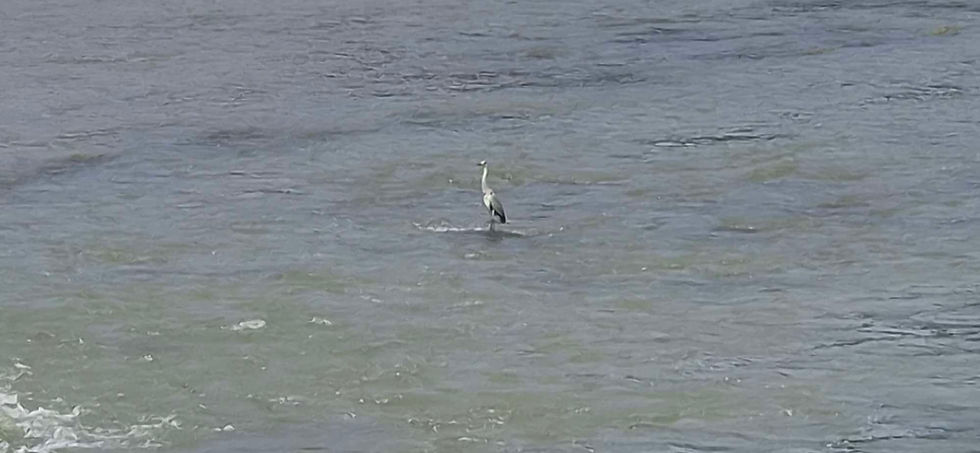
The Adour river runs through town, and provides a cooling backdrop. Bottom photo - our opportunistic hotel from across the river (our room is the second in the right, top floor).




Janet and Jacques outside the tourist bureau.

Tuesday market day

The impressive 17thC city hall building

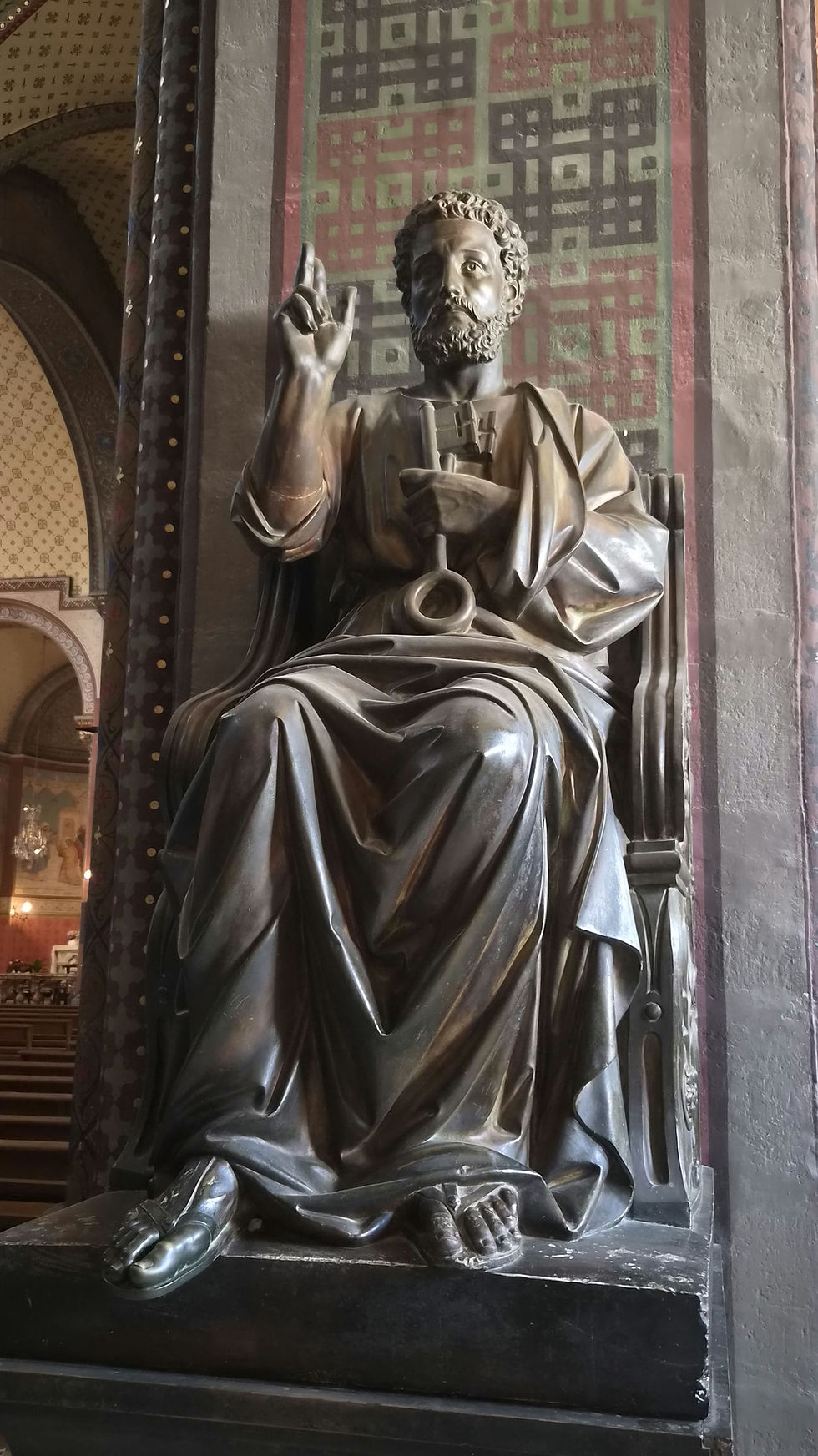
Then the cathédrale Saint-Jean-Baptiste d'Aire. For a non-religious person I sure spend a lot of time photographing cathédrales and églises. This one is both ancient and new, having been burnt and destroyed over the ages. This iteration is 19th c. The paint work is quite stunning. My namesake at photo 3.
There was a display in the church showing pelerin numbers through Aire in recent years. Apparently: 2023 - 1138; 2024 - 1500; and 2025 - 1740, of whom 24 were Aussies. Not very many, really, and that supports yesterday's commentary. That said, those numbers do look a bit light to me.


Next stop, another church!! This time the Église Sainte-Quitterie. This is quite a story. I think it goes like this (depending on what you read there are several different variations) ...
In the 5th century young Quiteria was born in Portugal to a Roman governor and his wife, and adopted Christianity. Dad not happy. He tells her to renounce her faith and marry an Arian prince. She says no, and flees to Aire. Dad's men (or maybe the prince) follow her, catch her here, and chop off her head. Some time later (11th C) the Benedictines build a church at the site of her beheading.
Another legend was that she was the daughter of a Visigoth king, but that seems to be somewhat less popular. Obviously something happened, but the stuff of legend and truth aren't always good bedfellows.
Photos below, in order:
Le église
The very ornate altar
Quiteria's tomb
A dark subterranean room, with chains and manacles. I mean, who knows???
The carved tempanum
Le église from another angle.
This church also apparently has a further special significance as it is on the way to Santiago. We will walk past again in the morning.


The somewhat underwhelming Fontaine Sainte-Quitterie. One story says that the spring sprung on the spot where Quiteria's head fell when she met her fate. The Chateau in the back-picture was very impressive.

Then back down the hill into town for coffee alongside the canal near the old mill (photo 3). Apparently the canal is on the site of the old Gallo-Roman walls; perhaps once the town's moat.


A couple of buildings in the old city and then the bullring (not used as such I don't think, rather perhaps for the bloodless cow fighting I described a couple of days back).


In yesterday's post, Sounds, I talked about the fighter jets we could hear but not see. Well, we saw them today

And I think, to close, a commentary on how things change. Below is the oldest building in town. The house was built in the 14th century. It belonged to the church and served as the officiality's house for the diocese of Aire, an ecclesiastical court (hence its name, the Bishop's House Court). Later, the town's aldermen came there to administer justice. Today ... a pizza shop.

No more rest days until we arrive in St Jean in 9 days time. Only one more big walking day (i.e. greater than 25 klms). Weather forecast looks fairly benign (some days in the mid 30s, but nothing like a week back). Compeed forecast is positive. Stand by for daily yabber from the road.


Sounds like you and Janet will be taking us to church when you get back! A great read, as ever. May your blisters be forever soothed!